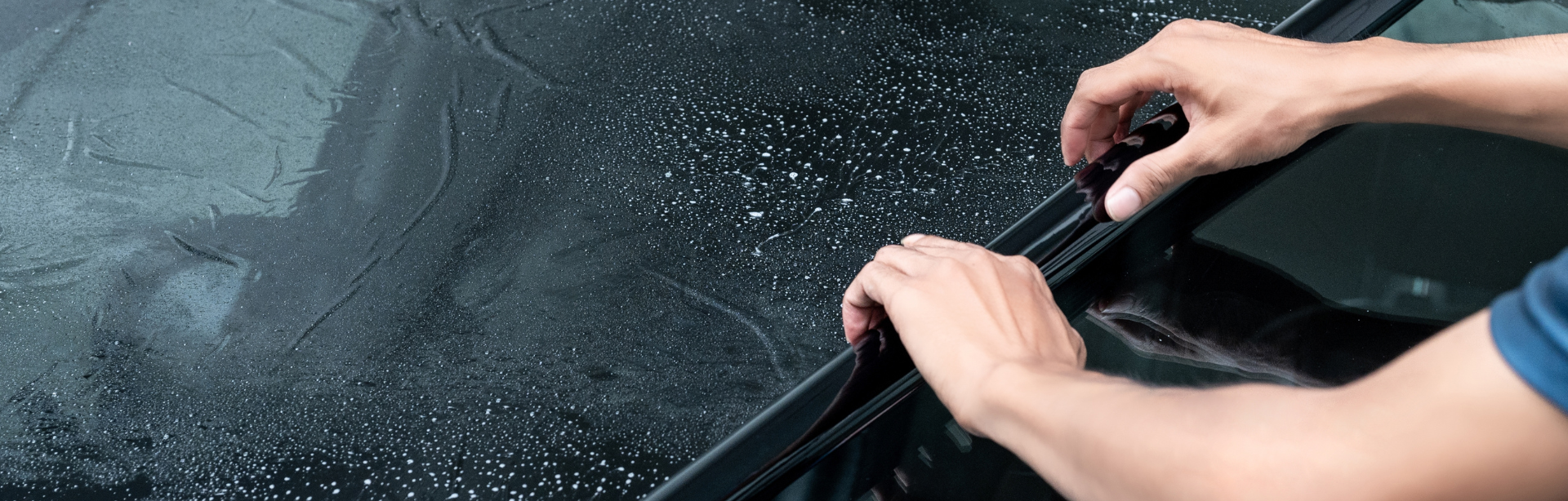
Installing window film on your vehicle might seem like a simple weekend project. With dozens of pre-cut rolls available online, taking matters into your own hands can be tempting. However, getting a seamless finish that lasts for years without peeling, bubbling, or purpling takes much more than a steady hand and a utility knife. Professional results rely heavily on a controlled environment, specific tools, and a deep understanding of optical physics.
The Hidden Enemy: Environmental Contaminants
The biggest challenge with DIY application is airborne debris. Rolling down your vehicle’s window on a calm afternoon might feel pleasant, but dust, lint, and pollen are constantly floating in the Missouri air. The moment you peel the protective backing off an adhesive film, it acts like a magnet for stray particles. Even microscopic specs trapped underneath will create permanent, unsightly bubbles that compromise both clarity and adhesion.
Professional shops combat this by using dedicated, dust-controlled tint bays equipped with air filtration and humidity management systems. This enclosed setting minimizes atmospheric dust, giving the film a pristine surface to adhere to.
Glass Curvature and the Shrinking Process
Vehicle windows are rarely flat. Rear glass and windshields feature complex compound curves that standard flat film simply will not conform to without proper techniques. If you lay film directly over curved glass, it creases and gathers along the edges.
Achieving a snug fit requires a process called heat shrinking, where a technician uses a commercial heat gun to carefully contour the film to the exact shape of your glass prior to application. Applying too much heat can distort the optical clarity or burn through the film, while too little heat leaves fingers of excess material. Mastering heat distribution requires substantial experience and calibrated gear.
Legal Compliance and Material Grade
It is also vital to keep regional tint regulations in mind. Missouri law outlines strict limits regarding visible light transmission, particularly for front side windows and windshield top banners. Understanding local visibility guidelines ensures your vehicle remains road-legal and safe for night driving. You can review national vehicle safety standards and equipment guidance directly through the National Highway Traffic Safety Administration.
High-grade ceramic and carbon films offer superior heat rejection without requiring dark shading, but these advanced materials demand exact installation steps to prevent hazy reflections.
Quality You Can Count On
Investing in professional window tinting saves you time, prevents wasted materials, and ensures your vehicle receives a durable finish that enhances comfort and UV protection for years down the road. If you are looking to upgrade your ride with reliable auto glass care or explore specialized vehicle protection services, our team at Machens Mobile Glass is always happy to answer your questions and help you find the right solution for your vehicle.